
Mardi Himal Trek
Trek at a Glance
Price From
US$ 290 per person
Duration
4–5 days
Trip Grade
Moderate
Max. Altitude
4,500m
Best Season
Oct–May
Group Size
1–12 pax
Region
Annapurna
Accommodation
Tea houses
Meals
All meals (Backpacker: breakfast)
Start / End Point
Pokhara
Permits
ACAP
Mardi Himal Trek Overview

Itinerary designed by Rohit Timilsina, Co-Founder & Lead Guide Verified local guide
A quieter Annapurna alternative that rewards you with close-up views of Machhapuchhre and Annapurna South from a ridge-top trail few trekkers know exists.
Mardi Himal is the route our team recommends when someone wants an honest Annapurna experience without walking in a procession of trekkers. The trail peels off the main Annapurna circuit near Dhampus and climbs its own ridge, through rhododendron forest, past the small clearings at Low Camp and Forest Camp, and eventually up to High Camp at 3,550m before the final push to the Upper Viewpoint at around 4,200m or, for those who want more, the base camp plateau at 4,500m.
What strikes most people is how different the perspective is from here compared to Poon Hill or the ABC trail. Machhapuchhre fills the sky almost directly in front of you at High Camp in a way that even photographs don't quite capture. Mardi Himal itself, a sharp, rarely-climbed peak, stands to the north-east, and the Annapurna massif stretches across the full western horizon. Our guides look up every single morning at High Camp.
The trail is well-suited to first-time trekkers in Nepal. The only permit required is the Annapurna Conservation Area Permit (ACAP), checked at Pothana above Dhampus. Maximum sleeping altitude is High Camp at 3,550m, manageable for most healthy walkers ascending gradually over four or five days. The descent typically runs through Badal Danda and Low Camp to Siding village, where a jeep ride back to Pokhara saves retracing steps and provides a genuine Gurung village as the last cultural stop.
Who this trek is for: Mardi Himal works well for first-time Himalayan trekkers who are fit but not experienced at altitude, and for returning visitors who have already done Poon Hill or ABC and want something less crowded. The short duration and modest sleeping altitude (3,550m) make it the most forgiving of the Annapurna region's significant viewpoint treks. Families with active teenagers handle it comfortably in five days.
Mardi Himal Upper Viewpoint
4,500 m / 14,763 ftRidge walk above the clouds to the boulder-field perch at 4,500m, directly opposite Machhapuchhre. The mountain fills the sky in a way no photograph captures, with Annapurna South and Hiunchuli stretched across the western horizon.
Mardi Himal Trek Highlights
- Closest views of Machhapuchhre (Fishtail)
- High Camp at 3,550m and upper viewpoint at 4,500m
- Quiet ridge-top trail with fewer trekkers
- Diverse forest-to-alpine ecology
- Views of Annapurna South
Mardi Himal Trek Itinerary
| Day | Itinerary | Max Altitude | Distance | Duration |
|---|---|---|---|---|
| Day 1 | Pokhara to Pritam Deurali (2,100m) | 2,100m / 6,890ft | 6km / 3.7mi | 3 hours hike + 1 hour drive |
| Day 2 | Pritam Deurali to Low Camp (2,600m) | 2,600m / 8,530ft | 9km / 5.6mi | 5-6 hours |
| Day 3 | Low Camp to High Camp (3,550m) | 3,550m / 11,647ft | 6km / 3.7mi | 4 hours |
| Day 4 | High Camp to Viewpoint, MBC, descend to Sidding village | 4,500m / 14,764ft | 16km / 10mi | 8-9 hours |
| Day 5 | Sidding village to Pokhara | — | — | 2 hours drive |
Day 01: Pokhara to Pritam Deurali (2,100m)
Distance6km / 3.7miDuration3 hours hike + 1 hour driveAltitude2,100m / 6,890ftA short 1-hour drive from Pokhara brings you to Dhampus village, the trailhead for the Mardi Himal trek. After breakfast or brunch at Dhampus, the trail enters terraced farmland and then climbs steadily through pine and rhododendron forest, passing the Gurung village of Pothana mid-way.
The path is well-marked and gains altitude gradually. In spring (March to May) the rhododendrons cover the hillsides in vivid reds and pinks. After about 3 hours of walking, you reach Pritam Deurali, where the Mardi ridge trail proper begins. The teahouse is simple but comfortable, with warm blankets and hot meals.
With no road noise and no phone signal, the evening is remarkably peaceful. Your guide will brief you on the next day's route over evening tea.
Day 02: Pritam Deurali to Low Camp (2,600m)
Distance9km / 5.6miDuration5-6 hoursAltitude2,600m / 8,530ftElevation Gain+500 mThe trail steepens today as you push from Pritam Deurali to Low Camp through dense rhododendron and oak forest. Breakfast at Pritam Deurali, lunch at Forest Camp on the way.
In the spring trekking season the hillside erupts in brilliant reds, pinks, and whites as the rhododendrons reach full bloom. Even outside the flowering season, the twisted trunks and hanging moss give the forest a magical quality. As you gain altitude, the trees gradually begin to thin and you catch your first glimpses of Annapurna South (7,219m) and Hiunchuli (6,441m) through gaps in the canopy.
Low Camp sits on a ridge clearing with simple but welcoming teahouses. On clear evenings the sunset views from the terrace are spectacular, with the snow peaks glowing gold and pink as the light fades. Stay well hydrated and eat plenty of carbohydrates. Tomorrow you will break above the treeline.
Day 03: Low Camp to High Camp (3,550m)
Distance6km / 3.7miDuration4 hoursAltitude3,550m / 11,647ftElevation Gain+950 mToday is the day the Mardi Himal trek truly reveals its magic. About 4 hours of ridge walking above the treeline. Breakfast at Low Camp, lunch at Badal Danda. Within an hour the forest thins, then vanishes entirely as you break onto wide open ridgeline.
Machhapuchhre (Fishtail, 6,993m) dominates the skyline directly ahead. From this angle you are closer to it than almost any other trekking route allows. To the right, Mardi Himal (5,587m) and Annapurna South (7,219m) form an imposing wall. On the far left, Annapurna I (8,091m) and Annapurna III peek over the ridgeline.
The trail follows a narrow ridge with steep drops on both sides, giving an exhilarating sense of exposure without any technical difficulty. High Camp is perched on a narrow section of the ridge with teahouses cleverly built into the terrain. The accommodation is basic but the location is world-class.
Day 04: High Camp to Viewpoint, MBC, descend to Sidding village
Distance16km / 10miDuration8-9 hoursAltitude4,500m / 14,764ftElevation Gain+950 mStart the day early at around 4:30 am and hike 2 hours to the viewpoint for sunrise and the mountain panorama. The first rays hit the summit of Machhapuchhre and the entire amphitheatre of peaks is ablaze with colour: Annapurna I, Annapurna South, Hiunchuli, Mardi Himal, and Machhapuchhre stand in a semicircle around you.
For trekkers wanting more, an optional 1.5-hour push to Mardi Himal Base Camp at 4,500m takes you to the very upper plateau. Back to the guest house at High Camp for a late breakfast, then the long descent begins. Lunch on the way.
The descent drops through every vegetation zone, from alpine scrub back through rhododendron forest, past terraced farmland, and into the lowlands around Sidding village. The descent is hard on the knees, so trekking poles help. By late afternoon you reach Sidding, where the warm, thick air of the lowlands feels like a blanket after the cold of High Camp.
Day 05: Sidding village to Pokhara
Duration2 hours driveBreakfast at Sidding village, then a 2-hour jeep drive back to Pokhara along the winding Lwang road through terraced farmland and small Gurung settlements. After the intensity of the high-altitude days, the warmth of the lowlands feels luxurious. Back in Pokhara, a hot shower feels like the ultimate luxury after High Camp. Your guide will present you with a trek completion certificate.
Choose Your Itinerary Length
3-day express
A fast push to High Camp and the viewpoint for fit hikers short on time. Long days, less margin for weather.
4-day classic
Drives in higher to Forest Camp and trims one teahouse night. Popular with returning trekkers.
5-day recommended
The gentlest ascent profile and the best odds of a clear sunrise at the Upper Viewpoint. Our default.
7-day relaxed
Adds Australian Camp, Lwang village, and extra acclimatisation for a slower, more cultural loop.
Your Trek Is Prepared & Led by a Local Guide
 Govt. License #1497
Rohit Timilsina
Co-Founder & Lead Guide · 6K Nepal Treks
Hi, I'm Rohit Timilsina
I started 6K Nepal Treks to give travellers the trek I would want myself: small groups, honest prices and a guide who actually knows the trail. I have guided across the Annapurna, Manaslu and Everest regions for over five years, and I design every itinerary on this site personally.
“Whether it is your first teahouse trek or your tenth Himalayan expedition, I want you back home telling everyone it was the best trip of your life.”
Mardi Himal Trek Cost & What's Included
Pick a comfort level to see exactly what its package covers. Prices by group size are in the booking card.
What is included in this trek package?
What is excluded in this trek package?
Mardi Himal Trek Reviews
4.9★ from 90+ Google Reviews
Trekkers guided from 30+ countries.
“My first trek with Rohit, who is extremely knowledgeable. He is the mountain man of Nepal. His deep love for the mountains means he wants to give his trekkers the best experience, share his stories but above all make sure you are feeling safe, comfortable and able to complete the trek. We did Mardi Himal Trek, blessed with the weather. Do not hesitate to book with Rohit, I will be back again. Namaste”
Ange ★
Mardi Himal Trek · Jan 2026
“This was my second trek with Rohit, I first did the Manaslu Circuit with him a while ago and came back for Mardi Himal this time. Both experiences were absolutely fantastic. Rohit is professional, kind, and really knows the mountains. He always makes sure you're safe, comfortable, and enjoying yourself. He takes care of all the logistics, finds great tea houses, and adjusts the pace perfectly for everyone. Wouldn't trek in Nepal with anyone else.”
Peter Murphy ★
Manaslu Circuit + Mardi Himal · Jan 2026
Why Book With 6K Nepal Treks
Licensed & Insured
Registered with Nepal Tourism Board, TAAN and NMA. Fully insured for trekking, climbing, and high-altitude emergencies.
Expert Local Guides
Every trek is led by a licensed, first-aid trained Sherpa or Gurung guide, born and raised in these mountains.
Safety First
Pulse oximeter and emergency oxygen carried on all high-altitude treks. Helicopter evacuation protocol on standby.
Small Groups
Maximum 12 trekkers per group, and one porter per two guests whenever porters are part of your package. You are a person, not a tour number.
Fair & Transparent Pricing
No hidden fees. Every quote itemises exactly what your package covers and what it does not, so nothing lands on you at the trailhead.
Responsible Travel
Fair wages for all staff, eco-friendly practices on the trail, and direct support for the mountain communities we work with.
Know Before You Go
Mardi Himal is rated easy-to-moderate and is genuinely accessible to first-time trekkers. There are no technical sections, no glacier crossings, and no scrambling above High Camp on the standard Upper Viewpoint route. The challenge lies in cumulative fitness over four to five consecutive days of uphill walking, mostly on stone steps and ridge paths.
Daily walking time ranges from four to seven hours depending on the day. The steepest sustained climbing occurs between Forest Camp and High Camp on day three, about 930 vertical metres over 5-6 hours. Above High Camp, the rocky path to the Upper Viewpoint gains another 650m at a gentler gradient, but the reduced oxygen at 4,000m makes the final hour feel noticeably harder than the numbers suggest.
The main physical concern is not technical difficulty but the mossy, lichen-covered stones in the forest zone between Dhampus and Low Camp, which can become slippery after rain or in cold morning conditions. Trekking poles are strongly recommended, particularly on the descent. In winter (December-February), snowfall may cover the trail from Forest Camp upward, adding route-finding complexity and requiring gaiters and microspikes in some years.
Altitude is a secondary consideration at the sleeping elevations here. High Camp at 3,550m is well below the threshold where most healthy adults experience serious AMS. The optional base camp at 4,500m pushes into territory where mild symptoms (headache, fatigue) are more common, and our guides closely monitor these before allowing anyone to continue past High Camp.
A month of consistent cardiovascular training before arriving in Nepal makes Mardi Himal comfortable rather than a grind. Running, cycling, swimming, or hiking regularly builds the aerobic base required for five to seven hours of walking at elevation. Focusing on uphill work is beneficial if gradients are accessible. Strength training for the lower body aids on descent days, involving long sections of stone steps that exert stress on the quads and knees. Practice with trekking poles can also help if they are not familiar.
The only permit required for Mardi Himal is the Annapurna Conservation Area Permit (ACAP), costing NPR 3,000 (approximately USD 22) for foreigners and NPR 1,000 for SAARC nationals. This permit is checked at Pothana above Dhampus. It can be obtained at the ACAP counter in Damside, Pokhara, or at the Nepal Tourism Board in Kathmandu. Passport copies and two passport photos are necessary. Our team handles all permit paperwork as your licensed guide.
The sleeping altitude on Mardi Himal peaks at High Camp (3,550m), which is moderate by Nepal standards. The rate of ascent over the standard five-day itinerary is gentle enough that most healthy adults acclimatise without pharmaceutical assistance. From Forest Camp (2,620m) to High Camp (3,550m), the gain is around 930m in one day, within the widely-cited guideline of 300-500m per night above 3,000m.
The base camp option adds a 950m day-excursion above sleeping altitude, which is generally well-tolerated as long as descent occurs to sleep rather than staying at altitude. Our guides monitor for headache, loss of appetite, or unusual fatigue at High Camp. These are the early signals that the body needs more time and rest days may be extended if warranted.
Acute Mountain Sickness (AMS) symptoms on this trek are typically mild and resolve with descent or a slower pace. Severe AMS (HACE or HAPE) is rare at these altitudes but not impossible. The golden rule applies: if symptoms worsen instead of improving, we descend immediately. Helicopter evacuation to Pokhara from High Camp takes around 15 minutes, ensuring reliable backup. However, insurance is essential.
Teahouses on the Mardi trail are family-run and relatively simple: wooden rooms with two to four single beds, shared squat toilets, and solar-powered electricity that becomes unreliable at High Camp in overcast weather. The rooms are functional and warm with supplied blankets, but a sleeping bag liner and light down bag at High Camp are recommended.
Meals follow the standard Nepali teahouse menu: dal bhat (unlimited refills), noodle soups, fried rice, eggs, porridge, and Tibetan bread for breakfast. The menu simplifies at High Camp where supply logistics are harder. Eating larger meals at lunch is encouraged when the body is working hardest. Garlic soup in the evenings both warms and mildly helps with circulation at altitude.
Prices increase with altitude. Water that costs NPR 80 in Pokhara rises to NPR 150 at Forest Camp and NPR 300 at High Camp. Budget roughly NPR 2,000-3,000 per day for food and incidentals while on the trail. ATMs and currency exchange are only available in Pokhara, so withdrawing sufficient rupees before starting is advisable.
The following is a solid starting point for most multi-day treks we run. Adjust for the season and the maximum altitude of your specific route. Shorter, lower-altitude hikes need far less than this full list. For the key insulation items (down jacket and four-season sleeping bag) we offer rental in Kathmandu or Pokhara for USD 35 each.
General
- Four-season (zero degree) sleeping bag (rental available: USD 35)
- Insulated down jacket (rental available: USD 35)
- Daypack, 30 to 45 litres, with rain cover
- Sleeping bag liner
Head & Face
- Sun hat or cap
- Beanie or knitted hat for colder mornings and evenings
- Buff or neck gaiter
- Sunglasses with full UV protection
- Headlamp with spare batteries
Upper Body
- Technical base layer shirts, two
- Technical long-sleeve shirts, two
- Fleece or synthetic mid-layer
- Waterproof and windproof shell jacket
Lower Body
- Hiking pants, two pairs
- Technical base-layer leggings for cold mornings
- Waterproof or windproof outer shell pants
- Comfortable pants for evenings in the teahouse
Hands
- Lightweight liner gloves
- Insulated outer gloves for high altitude or winter conditions
Feet
- Waterproof trekking boots with ankle support, broken in before the trip
- Hiking socks, three to five pairs
- Liner socks if prone to blisters
- Comfortable shoes or sandals for evenings
- Microspikes recommended November to March on routes above 4,000m
First Aid & Medications
- Personal prescription medications
- SPF 50+ sunscreen and SPF lip balm
- Blister care, plasters, and antiseptic cream
- Electrolyte sachets or tablets
- Note: our guides carry a comprehensive group first aid kit with pulse oximeter
Other Essentials
- Passport, two passport-sized photos, and photocopies of travel documents
- One-litre reusable water bottle or hydration bladder
- Trekking poles (strongly recommended)
- Small toiletry kit, quick-dry towel, and toilet paper
- High-protein snacks for the trail (bars, nuts)
- Waterproof dry bag for documents and electronics
- We provide a free duffel bag at your pre-trip meeting, used for luggage carried by the porter. The duffel stays yours afterwards.
- One porter is assigned per two trekkers. The duffel bag should weigh no more than 10 kg / 22 lbs per person.
- Always carry your own daypack with essentials: cash, documents, water, camera, rain gear.
- Non-trekking luggage can be stored securely at your hotel in Kathmandu or Pokhara.
- Down jacket and four-season sleeping bag are available for rent at USD 35 each. Loss or damage reimbursement is USD 100 per item.
Guide & Porter Services
Every trek is led by a government-licensed, English-speaking lead guide who is also trained in first aid and high-altitude emergency response. For groups of seven or more we add an assistant guide. Porters are assigned one per two trekkers, each carrying up to 10 kg of your main luggage so you only carry a daypack. All staff wages, accommodation, meals, gear, and insurance are fully covered in the package price.
Accommodation Bookings
We pre-book every night's accommodation before you start, so you never arrive at a full teahouse during peak season. Nights before and after the trek are in 3-star hotels in Kathmandu or Pokhara with breakfast included. On the trail you stay in tea houses or local lodges on a twin-sharing basis, with the best available rooms in each village. Private rooms and en-suite bathrooms are available where offered, usually at lower altitudes.
Transportation Arrangements
All ground transfers are arranged by private or shared tourist vehicles as specified in the itinerary. Airport pick-up and drop-off are included. Where a domestic flight is required (for example, Kathmandu to Lukla for Everest, or Jomsom to Pokhara for Mustang routes), the round-trip fare is covered in the package. We monitor flight and road conditions daily and adjust logistics proactively when weather or landslides affect the schedule.
Equipment Rental
A four-season sleeping bag and an insulated down jacket can be rented in Kathmandu or Pokhara at USD 35 per item for the duration of the trek. Trekking poles, microspikes, and additional layers are also available on request. We supply a 75-litre duffel bag for you to keep at your pre-trip briefing. A full packing checklist is sent after you book so you can pack with confidence.
Insurance Requirements
Comprehensive travel insurance is mandatory for every trek we operate. Your policy must explicitly cover trekking at the maximum altitude of your route and include emergency helicopter evacuation, medical treatment, and trip cancellation. Please send us a copy of your policy at least two weeks before departure. We cannot start the trek without confirmation of valid coverage. This is for your safety and ours.
Good to know. Arrive in Pokhara at least one day before departure so there is time for your pre-trip briefing and any last-minute gear hire. We can store spare luggage while you trek.
FAQs for Mardi Himal Trek
Plan Your Mardi Himal Trek
Full price breakdown by group size, what's included, and how to trek it on a budget.
The 3, 4, 5 and 7-day routes compared, with daily distances and altitudes.
ACAP and TIMS costs, where they are checked, and what 6K arranges for you.
Month-by-month weather, crowds, and the spring versus autumn trade-off.
Daily hours, the hardest section, fitness prep, and whether beginners can do it.
Exactly what to bring for the ridge, what to rent in Pokhara, and what to leave behind.
Low Camp, Forest Camp, High Camp, the viewpoint, and the 4,500m base camp explained.
Which short Annapurna trek wins for views, difficulty, and crowds.
Choose your package, price per person (USD)
Other packages
Free cancellation up to 30 days
No booking fees, 30% deposit
Licensed operator (#1497)
You may also like
Similar Treks

Kapuche Glacier Lake
- Max altitude
- 2,546m
- Difficulty
- Moderate
- Best season
- Autumn, Winter +
$260per person

Khumai Korchan Trek
- Max altitude
- 3,682m
- Difficulty
- Moderate
- Best season
- Autumn, Winter +
$270per person
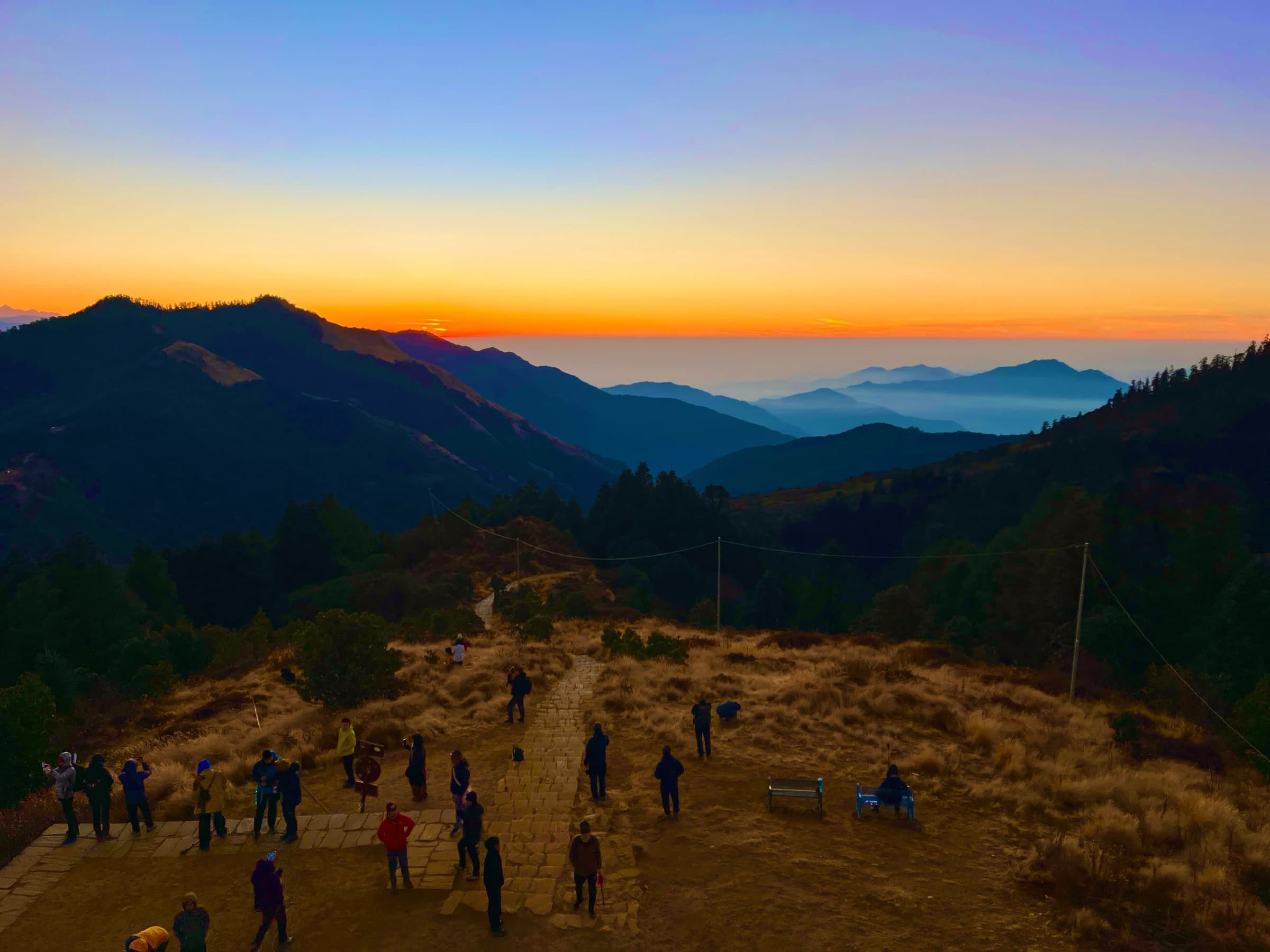
Ghorepani Poon Hill Trek
- Max altitude
- 3,210m
- Difficulty
- Moderate
- Best season
- Spring & Autumn
$210per person

Kori Hill Trek
- Max altitude
- 3,800m
- Difficulty
- Moderate
- Best season
- Summer & Autumn
$290per person
