

The honest take
Mardi vs Poon Hill, without the marketing
Mardi Himal and Poon Hill are the two most popular short treks in Nepal, and both live entirely in the Annapurna region within a couple of hours of Pokhara. For trekkers with only a week in Nepal, or those who want a serious mountain experience without the multi-week commitment, these two routes are almost always the final decision.
Poon Hill is the classic first trek. For over forty years it has been the gateway experience that introduces international visitors to Himalayan trekking. You walk through Gurung and Magar villages, stay in traditional teahouses, and wake up before dawn to watch the sun rise over Dhaulagiri, the Annapurnas, and Machapuchare from a viewpoint at 3,210 m. The one section trekkers remember is the 3,280 stone steps leaving Ulleri, a thigh-burning hour that most people consider the hardest part of the trek. It is still the postcard shot of the Himalayas, and the trek is deliberately easy overall, suitable for families, older parents, and complete beginners, running year-round with minimal weather risk.
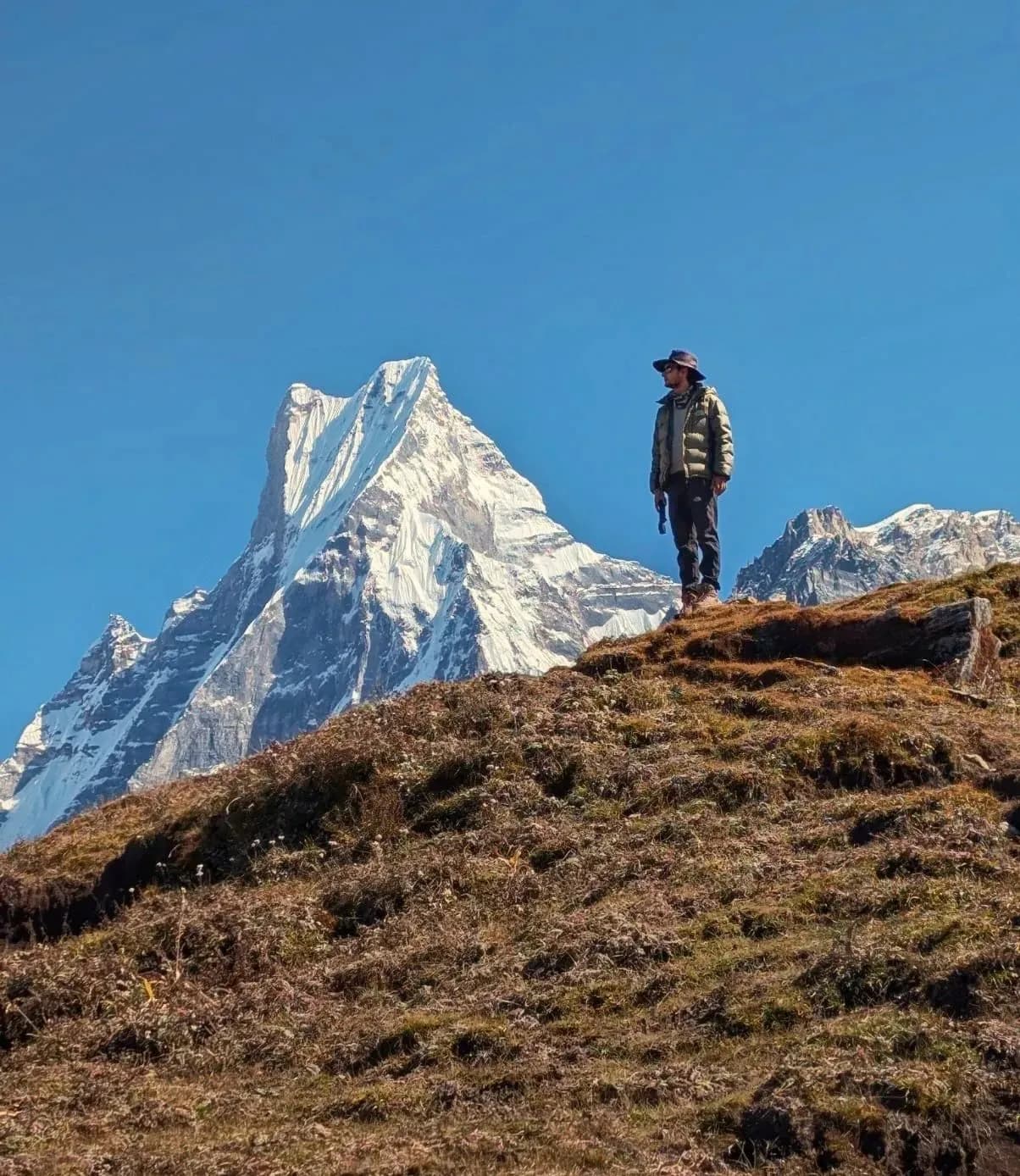
Mardi Himal is the newer, harder, quieter sibling. The full Mardi route was only formalised in 2012, and even today it sees perhaps a third of Poon Hill's traffic. You follow a ridgeline high above the Modi Khola gorge, gaining altitude quickly to the High Camp at 3,550 m and pushing further to the Upper Viewpoint at 4,500 m, where Machapuchare's south face looms so close you can see avalanche tracks. It is harder, colder, steeper, and far more remote in feel, despite being logistically accessible.
Both treks can be completed in 4–5 days, both start and end in Pokhara, both use the same permits, and both cost around the same. The decision comes down to what you want from a short trek: the classic cultural-panorama experience (Poon Hill) or a more intense high-ridge adventure with mountains at arm's length (Mardi). Many of our clients do them in sequence on a single 8-day trip.
