

The honest take
EBC vs Manaslu, without the marketing
The Manaslu Circuit and Everest Base Camp sit at opposite ends of Nepal's trekking spectrum in almost every dimension except altitude and duration. One is the most famous trek in the country; the other is the one experienced trekkers quietly call Nepal's best-kept secret. Choosing between them says as much about the trekker as it does about the trek.
Everest Base Camp is a well-worn path. The route has been walked by trekkers for sixty years, serviced by Sherpa teahouses that have evolved into small lodges, and fed by daily flights from Kathmandu to Lukla. You will meet other trekkers every few hundred metres. You will eat yak-cheese pizza and drink cappuccino at 4,400 m. The infrastructure is excellent, and for many first-time Himalayan trekkers, that comfort is part of the appeal.
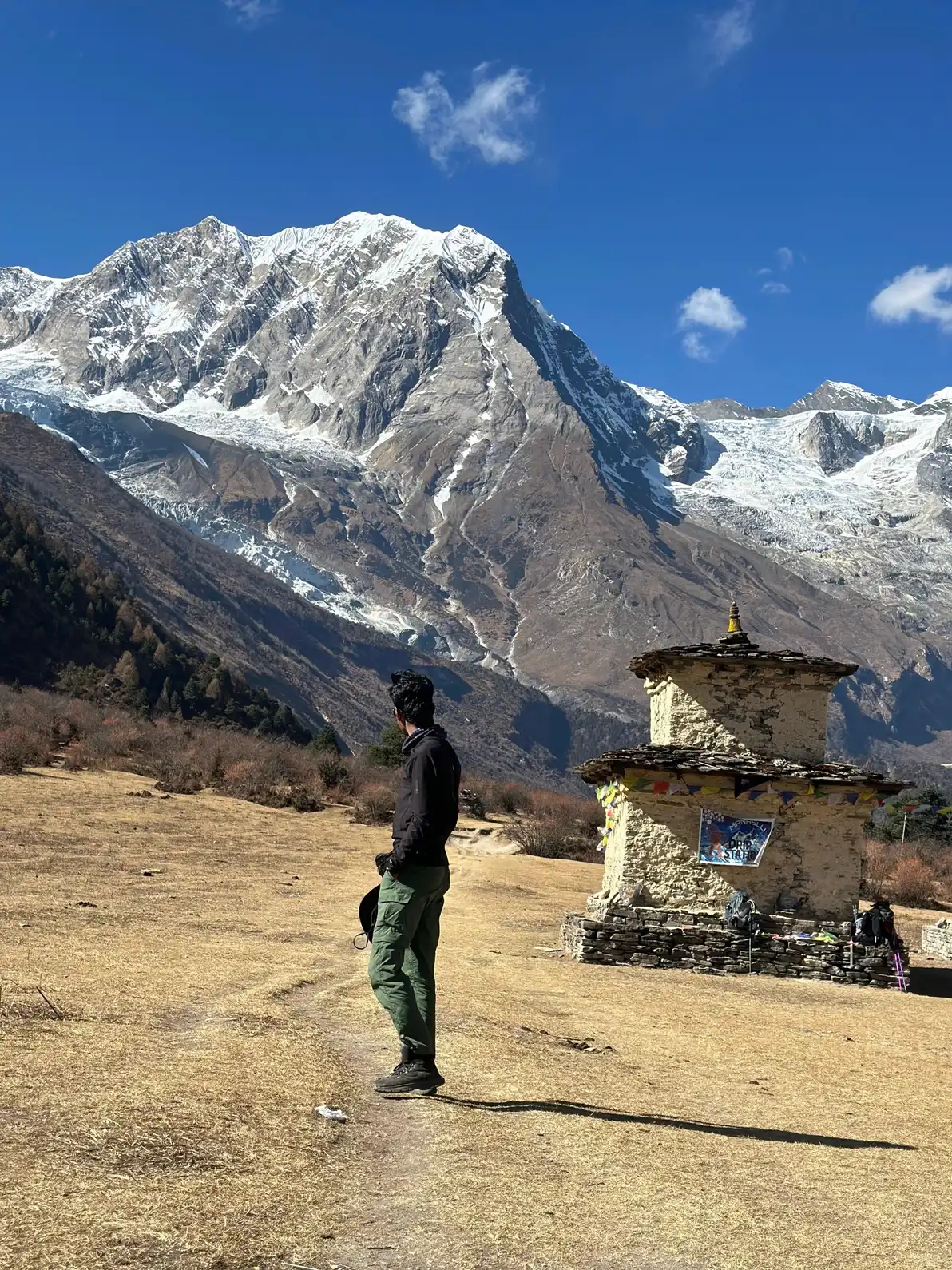
The Manaslu Circuit is the opposite. It was only opened to foreign trekkers in 1991, sits in a restricted conservation area that requires a special permit and mandatory licensed guide, and cannot be done by solo trekkers. You drive in on rough roads rather than flying to Lukla. Teahouses are basic. Wifi is rare and slow. For three days past Samagaon you may not see another Western trekker. The reward is a route that feels like Nepal trekking did in 1985, wild, culturally intact, and almost religiously quiet. The moment Manaslu's massive ice walls first appear above Namrung on day five is unforgettable; turquoise glacial lakes and prayer-flag-strung stupas line the route all the way to Larkya La.
Physically the two are similar. Both reach around 5,100–5,300 m, both run 13–14 days, both involve a high point that requires careful acclimatisation. The difference is not fitness; it is experience, temperament, and what you're actually looking for on the trail.
